Nasikabatrachus sahyadrensis
Purple Frog
AmphibianBest Season: Jun–Jul
Best locations
2
Expert creators
0
Field Reports (12 months)
0
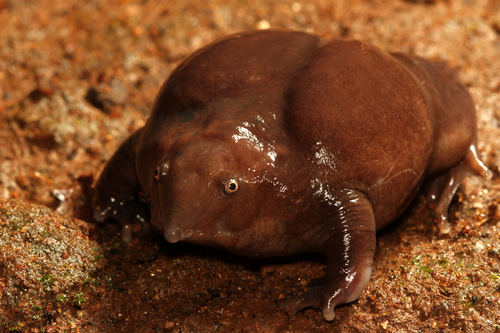
(c) David Raju, some rights reserved (CC BY-NC), uploaded by David Raju
About this species
Often called a "living fossil," the purple frog belongs to a lineage that split from its closest relatives roughly 100 million years ago, when India was still an island drifting toward Asia. It spends nearly its entire life several feet underground, surfacing for only a handful of nights a year during the pre-monsoon rains to breed — making it one of the hardest amphibians on Earth to actually see. The purple frog's brief monsoon emergence in the Western Ghats — a living fossil rarely seen above ground.
Behavior
Fossorial for essentially its entire life, using a pointed snout to burrow through soil and locate termite and ant colonies underground. Surfaces only for a few nights during the first heavy monsoon showers to call and breed in streams.
Diet
Termites and ants, captured underground using a uniquely adapted, projectile-like tongue.
Field Reports
0 total reports
Seen one? Be the first to report it
No field reports have been logged for Purple Frog yet. If you're a wildlife creator, log what you've seen — or browse sightings from other species.
Best locations for Purple Frog
Reserves and landscapes where our photographers reliably encounter this species, with links to place-specific guides.
Wildlife Creators Specialising in Purple Frog
View allNo one's claimed this species yet
Be the first expert here — if you're a wildlife photographer or guide who specialises in Purple Frog, join as a creator.
Upcoming Trips Targeting Purple Frog
No trips targeting this species yet
No trips are currently built around Purple Frog. Browse every active trip, or ask a guide directly through search.
When and Where to Photograph Purple Frog
The only realistic window is the first week or two of the monsoon's onset, at night, along Western Ghats streams — a specialist, guide-led search rather than a general safari sighting.
Plan field days around Jun–Jul: light is often strongest at dawn and dusk, when many mammals and birds are most active. Work with a naturalist who knows local movement patterns — they will position you ethically while improving your odds of a encounter in Western Ghats.