Crocodylus palustris
Mugger Crocodile (Marsh Crocodile)
ReptileBest Season: Jan–Dec
Best locations
22
Expert creators
0
Field Reports (12 months)
0
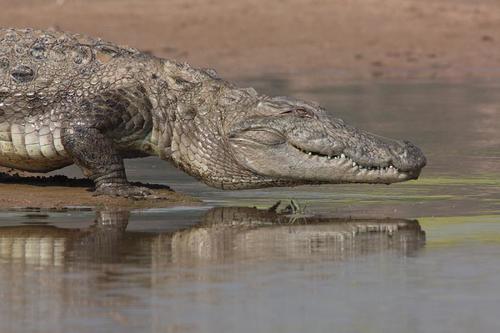
(c) Paul G. Schrijvershof, some rights reserved (CC BY-NC-ND), uploaded by Paul G. Schrijvershof
About this species
The mugger crocodile is India's widespread freshwater crocodile, found in rivers, lakes, reservoirs, and village tanks across the subcontinent. Broad-snouted and powerfully built, it is the crocodile most Indian wildlife photographers encounter first — Chambal's sandbanks and Ranthambore's lakes both hold healthy populations that bask in full view of boats and safari tracks. Where and when to photograph mugger crocodiles basking and hunting on India's rivers and lakes.
Behavior
A patient ambush hunter that spends hours basking motionless on sandbanks to regulate body temperature, then explodes into a fast lunge from the water's edge. Territorial adult males dominate favoured basking spots and bellow during the winter breeding season.
Diet
Fish form the bulk of its diet, but an adult will readily take waterbirds, turtles, and mammals as large as deer or livestock that come to drink.
Field Reports
0 total reports
Seen one? Be the first to report it
No field reports have been logged for Mugger Crocodile (Marsh Crocodile) yet. If you're a wildlife creator, log what you've seen — or browse sightings from other species.
Best locations for Mugger Crocodile (Marsh Crocodile)
Reserves and landscapes where our photographers reliably encounter this species, with links to place-specific guides.
Wildlife Creators Specialising in Mugger Crocodile (Marsh Crocodile)
View allNo one's claimed this species yet
Be the first expert here — if you're a wildlife photographer or guide who specialises in Mugger Crocodile (Marsh Crocodile), join as a creator.
Upcoming Trips Targeting Mugger Crocodile (Marsh Crocodile)
No trips targeting this species yet
No trips are currently built around Mugger Crocodile (Marsh Crocodile). Browse every active trip, or ask a guide directly through search.
When and Where to Photograph Mugger Crocodile (Marsh Crocodile)
Boat safaris on the Chambal are the most reliable way to see dozens basking on sandbars in a single float; visit mid-morning once the sun has warmed the banks. At Ranthambore, scan the lake edges near Padam Talao and Rajbagh from the safari track.
Plan field days around Jan–Dec: light is often strongest at dawn and dusk, when many mammals and birds are most active. Work with a naturalist who knows local movement patterns — they will position you ethically while improving your odds of a encounter in National Chambal Sanctuary.