Geochelone elegans
Indian Star Tortoise
ReptileBest Season: Jan–Dec
Best locations
3
Expert creators
0
Field Reports (12 months)
0
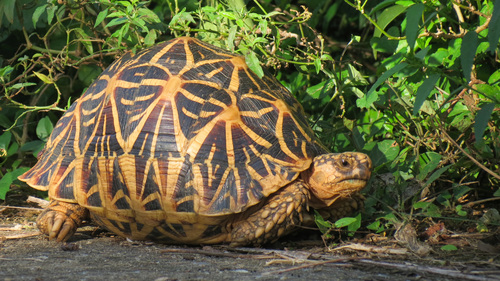
(c) Otto Bylén Claesson, some rights reserved (CC BY-NC), uploaded by Otto Bylén Claesson
About this species
The Indian star tortoise carries one of the most striking shell patterns of any reptile — a radiating starburst of pale lines on each dark scute that makes it instantly recognisable. It is also one of India's most heavily poached species for the illegal pet trade, which makes healthy wild populations in protected scrub genuinely worth seeking out. Finding Indian star tortoises in dry scrub and grassland reserves across peninsular India.
Behavior
A slow, deliberate grazer most active in the cooler hours after monsoon rains; retreats into scrub cover and aestivates through the hottest, driest months.
Diet
Grasses, fallen fruit, flowers, and occasional carrion or insects.
Field Reports
0 total reports
Seen one? Be the first to report it
No field reports have been logged for Indian Star Tortoise yet. If you're a wildlife creator, log what you've seen — or browse sightings from other species.
Best locations for Indian Star Tortoise
Reserves and landscapes where our photographers reliably encounter this species, with links to place-specific guides.
Wildlife Creators Specialising in Indian Star Tortoise
View allNo one's claimed this species yet
Be the first expert here — if you're a wildlife photographer or guide who specialises in Indian Star Tortoise, join as a creator.
Upcoming Trips Targeting Indian Star Tortoise
No trips targeting this species yet
No trips are currently built around Indian Star Tortoise. Browse every active trip, or ask a guide directly through search.
When and Where to Photograph Indian Star Tortoise
Walk slowly through open scrub in the early morning or late afternoon — the shell pattern is excellent camouflage against dappled grass and leaf litter, so look for movement rather than shape.
Plan field days around Jan–Dec: light is often strongest at dawn and dusk, when many mammals and birds are most active. Work with a naturalist who knows local movement patterns — they will position you ethically while improving your odds of a encounter in Blackbuck National Park (Velavadar).