Nycticebus bengalensis
Bengal Slow Loris
MammalBest Season: Jan–Dec
Best locations
2
Expert creators
0
Field Reports (12 months)
0
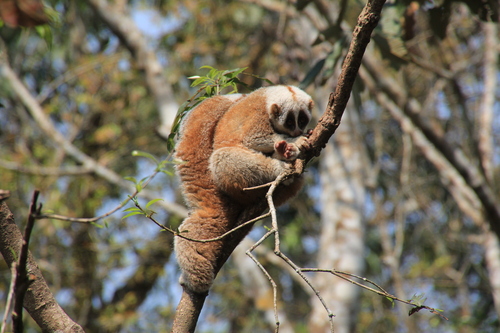
(c) должанский, some rights reserved (CC BY-NC), uploaded by должанский
About this species
The Bengal slow loris is one of the few venomous primates on Earth, delivering a toxin from glands on its inner elbow that it mixes with saliva. By day it curls into an near-invisible ball high in the canopy; by night its huge reflective eyes and painstakingly slow, deliberate movement through the branches make it one of Northeast India's most sought-after nocturnal sightings. Night-spotlighting for the venomous, slow-moving Bengal slow loris in Northeast India.
Behavior
Strictly nocturnal and almost entirely arboreal, moving hand-over-hand through the canopy with such deliberate slowness that it rarely snaps a twig. Solitary and territorial, marking routes with scent.
Diet
Gum and sap tapped from tree bark, fruit, insects, and occasionally small vertebrates or eggs.
Field Reports
0 total reports
Seen one? Be the first to report it
No field reports have been logged for Bengal Slow Loris yet. If you're a wildlife creator, log what you've seen — or browse sightings from other species.
Best locations for Bengal Slow Loris
Reserves and landscapes where our photographers reliably encounter this species, with links to place-specific guides.
Wildlife Creators Specialising in Bengal Slow Loris
View allNo one's claimed this species yet
Be the first expert here — if you're a wildlife photographer or guide who specialises in Bengal Slow Loris, join as a creator.
Upcoming Trips Targeting Bengal Slow Loris
No trips targeting this species yet
No trips are currently built around Bengal Slow Loris. Browse every active trip, or ask a guide directly through search.
When and Where to Photograph Bengal Slow Loris
Join a guided night walk with a spotlight — look for a pair of bright, round eyeshine reflecting back from the mid-to-upper canopy, then hold the light steady rather than following movement, since the loris moves too slowly to lose the beam.
Plan field days around Jan–Dec: light is often strongest at dawn and dusk, when many mammals and birds are most active. Work with a naturalist who knows local movement patterns — they will position you ethically while improving your odds of a encounter in Namdapha National Park.