Moschus leucogaster
Himalayan Musk Deer
MammalBest Season: Apr–Oct
Best locations
17
Expert creators
0
Field Reports (12 months)
0
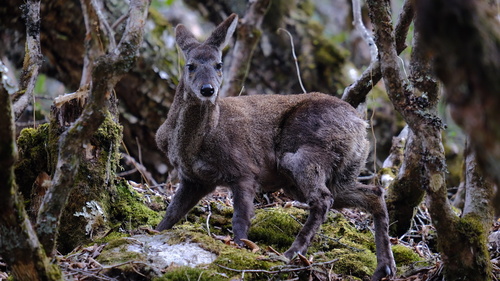
(c) Imane Romangin, all rights reserved, uploaded by Imane Romangin
About this species
The Himalayan musk deer is a small, fanged, hornless deer of the high Himalaya, hunted for centuries for the musk gland that gives it its name — a trade that pushed it to the edge of extinction across much of its range. The Great Himalayan National Park remains one of the more reliable places to see one, though it still demands a multi-day trek and considerable patience. Trekking to see the elusive, fanged Himalayan musk deer in high-altitude forest.
Behavior
Solitary, territorial, and crepuscular, most active around dawn and dusk. Males use protruding upper canines rather than antlers to spar for territory during the autumn rut.
Diet
Leaves, grasses, moss, and lichen browsed from the forest floor and understorey.
Field Reports
0 total reports
Seen one? Be the first to report it
No field reports have been logged for Himalayan Musk Deer yet. If you're a wildlife creator, log what you've seen — or browse sightings from other species.
Best locations for Himalayan Musk Deer
Reserves and landscapes where our photographers reliably encounter this species, with links to place-specific guides.
Himachal PradeshGreat Himalayan National Park
0 creators here
UttarakhandKedarnath Wildlife Sanctuary
0 creators here
SikkimKhangchendzonga National Park
0 creators here
UttarakhandAskot Wildlife Sanctuary
0 creators here
Himachal PradeshChurdhar Wildlife Sanctuary
0 creators here
Jammu and KashmirHirpora Wildlife Sanctuary
0 creators here
Wildlife Creators Specialising in Himalayan Musk Deer
View allNo one's claimed this species yet
Be the first expert here — if you're a wildlife photographer or guide who specialises in Himalayan Musk Deer, join as a creator.
Upcoming Trips Targeting Himalayan Musk Deer
No trips targeting this species yet
No trips are currently built around Himalayan Musk Deer. Browse every active trip, or ask a guide directly through search.
When and Where to Photograph Himalayan Musk Deer
Reaching musk deer habitat means a multi-day trek with an experienced local guide; scan forest edges and clearings at first light, when the deer are most likely to be moving and visible against the undergrowth.
Plan field days around Apr–Oct: light is often strongest at dawn and dusk, when many mammals and birds are most active. Work with a naturalist who knows local movement patterns — they will position you ethically while improving your odds of a encounter in Great Himalayan National Park.