Python molurus
Indian Rock Python
ReptileBest Season: Mar–May
Best locations
3
Expert creators
0
Field Reports (12 months)
0
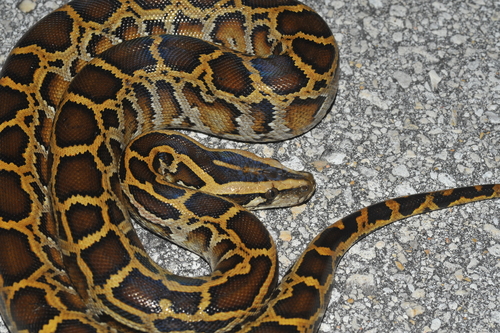
(c) Wayne Fidler, some rights reserved (CC BY-NC), uploaded by Wayne Fidler
About this species
The Indian rock python is the subcontinent's largest snake, a powerful non-venomous constrictor that can exceed 5 metres. Despite its size it is remarkably well camouflaged, and most sightings come from python basking near water rather than active hunting — a python digesting a large meal may stay in one spot for days. Finding Indian rock pythons basking near waterholes in central Indian forests.
Behavior
A largely nocturnal ambush predator that relies on camouflage rather than speed, striking and constricting prey rather than chasing it. Individuals often reuse favoured basking or denning sites for years.
Diet
Mammals up to the size of small deer and large birds, swallowed whole after constriction.
Field Reports
0 total reports
Seen one? Be the first to report it
No field reports have been logged for Indian Rock Python yet. If you're a wildlife creator, log what you've seen — or browse sightings from other species.
Best locations for Indian Rock Python
Reserves and landscapes where our photographers reliably encounter this species, with links to place-specific guides.
Wildlife Creators Specialising in Indian Rock Python
View allNo one's claimed this species yet
Be the first expert here — if you're a wildlife photographer or guide who specialises in Indian Rock Python, join as a creator.
Upcoming Trips Targeting Indian Rock Python
No trips targeting this species yet
No trips are currently built around Indian Rock Python. Browse every active trip, or ask a guide directly through search.
When and Where to Photograph Indian Rock Python
Check sunlit spots near waterholes and lake edges in the early morning, especially in the pre-monsoon months when pythons bask more openly to warm up before the heat sets in.
Plan field days around Mar–May: light is often strongest at dawn and dusk, when many mammals and birds are most active. Work with a naturalist who knows local movement patterns — they will position you ethically while improving your odds of a encounter in Ranthambore National Park.