Ailurus fulgens
Red Panda
MammalBest Season: Mar–Nov
Best locations
11
Expert creators
0
Field Reports (12 months)
0
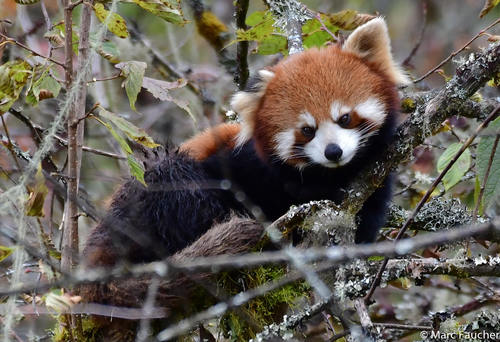
(c) pfaucher, some rights reserved (CC BY-NC), uploaded by pfaucher
About this species
The Red Panda is a small arboreal mammal with a russet coat and bushy ringed tail. Found in the temperate forests of Sikkim, Arunachal Pradesh, and West Bengal at elevations between 2,200 and 4,800 metres, it feeds primarily on bamboo. Singalila National Park offers some of the best treks for red panda sightings, especially during autumn and spring when bamboo foraging peaks. Find the Red Panda in Sikkim and Northeast India. Best trekking routes, bamboo forests, and seasonal sighting guides.
Behavior
Solitary and mainly crepuscular to nocturnal, spending much of the day curled asleep high in a tree fork. Uses an elongated wrist bone as a false thumb to grip bamboo stems.
Diet
Overwhelmingly bamboo leaves and shoots, supplemented occasionally with fruit, acorns, or eggs.
Field Reports
0 total reports
Seen one? Be the first to report it
No field reports have been logged for Red Panda yet. If you're a wildlife creator, log what you've seen — or browse sightings from other species.
Best locations for Red Panda
Reserves and landscapes where our photographers reliably encounter this species, with links to place-specific guides.
West BengalSingalila National Park
0 creators here
West BengalNeora Valley National Park
0 creators here
Arunachal PradeshNamdapha National Park
0 creators here
MeghalayaBalphakram National Park
0 creators here
SikkimFambong Lho Wildlife Sanctuary
0 creators here
SikkimKhangchendzonga National Park
0 creators here
Wildlife Creators Specialising in Red Panda
View allNo one's claimed this species yet
Be the first expert here — if you're a wildlife photographer or guide who specialises in Red Panda, join as a creator.
Upcoming Trips Targeting Red Panda
No trips targeting this species yet
No trips are currently built around Red Panda. Browse every active trip, or ask a guide directly through search.
When and Where to Photograph Red Panda
Treks around Singalila and Neora Valley with a local tracker scanning mossy tree forks at first light offer the best odds — sightings require both altitude and patience.
Plan field days around Mar–Nov: light is often strongest at dawn and dusk, when many mammals and birds are most active. Work with a naturalist who knows local movement patterns — they will position you ethically while improving your odds of a encounter in Singalila National Park.