Buceros bicornis
Great Hornbill
BirdBest Season: Jan–Dec
Best locations
32
Expert creators
0
Field Reports (12 months)
0
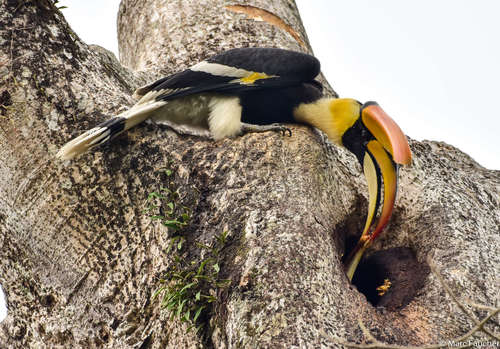
(c) Marc Faucher, all rights reserved, uploaded by Marc Faucher
About this species
The Great Hornbill is a magnificent large bird with a massive yellow-and-black casque atop its bill. Found in the evergreen forests of Northeast India and the Western Ghats, it is a vital seed disperser for fig trees. The deep whooshing sound of its wingbeats carries through the canopy. Namdapha and Pakke Tiger Reserve in Arunachal Pradesh are among the best locations for sightings. Discover the Great Hornbill in Northeast India's rainforests. Nesting behaviour, canopy walks, and birding expeditions in Arunachal.
Behavior
Forms monogamous pairs; the female seals herself into a tree-cavity nest with mud and droppings during incubation, relying on the male to feed her through a narrow slit. Flight is accompanied by loud, distinctive whooshing wingbeats.
Diet
Mainly figs and other forest fruit, supplemented occasionally with small animals.
Field Reports
0 total reports
Seen one? Be the first to report it
No field reports have been logged for Great Hornbill yet. If you're a wildlife creator, log what you've seen — or browse sightings from other species.
Best locations for Great Hornbill
Reserves and landscapes where our photographers reliably encounter this species, with links to place-specific guides.
Wildlife Creators Specialising in Great Hornbill
View allNo one's claimed this species yet
Be the first expert here — if you're a wildlife photographer or guide who specialises in Great Hornbill, join as a creator.
Upcoming Trips Targeting Great Hornbill
No trips targeting this species yet
No trips are currently built around Great Hornbill. Browse every active trip, or ask a guide directly through search.
When and Where to Photograph Great Hornbill
Scan large fruiting fig trees at canopy height in the early morning. The heavy wingbeat sound often announces an approaching hornbill well before it comes into view.
Plan field days around Jan–Dec: light is often strongest at dawn and dusk, when many mammals and birds are most active. Work with a naturalist who knows local movement patterns — they will position you ethically while improving your odds of a encounter in Namdapha National Park.